
The Laboratory
Dr. Belsley has been working with the Center for Simulation, Training and Robotic Surgery from the time it was established at St. Luke's Hospital in 2003. By integrating the disciplines of Surgery, Medicine, Biomedical Engineering, Computer Science and Cognitive Learning, the center aims to design systems that allow physicians and paramedical personnel to improve the technical and cognitive education necessary for the care of patients.
Minimally Invasive Skills Training
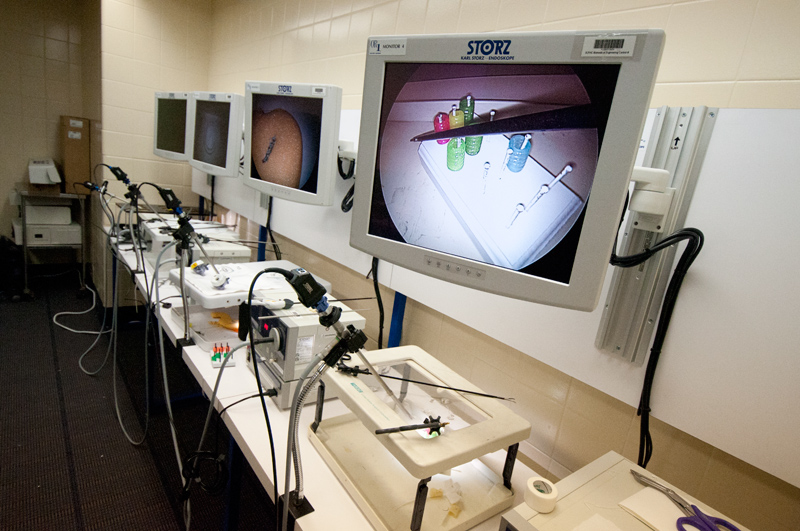 A variety of projects have evaluated the efficacy of minimally invasive skills training and their application in resident learning. Projects range from stationary skill stations to robotic machine learning algorithims of flight path movement.
Operating Suite
 Dr. Belsley helps coordinate surgical research at the laboratory which has been home to many innovations in surgical technique and physiology.
The advancement of surgical training as well as ongoing imaging, simulation and robotic research is the guiding compass for the Center.
The Center is composed of nearly 2,500 square feet of research, training and office space on the 11th floor of the Science and Research (S&R) building at the St. Luke's site. The fully operational research operating suite serves as host for robotic and laparoscopic training programs for both surgical residents and visiting surgeons. Advanced inanimate laparoscopic training modules as well as a laparoscopic computer simulator are housed in two other dedicated areas of the Center.
Basic Science Collaboration and Tumor Biology
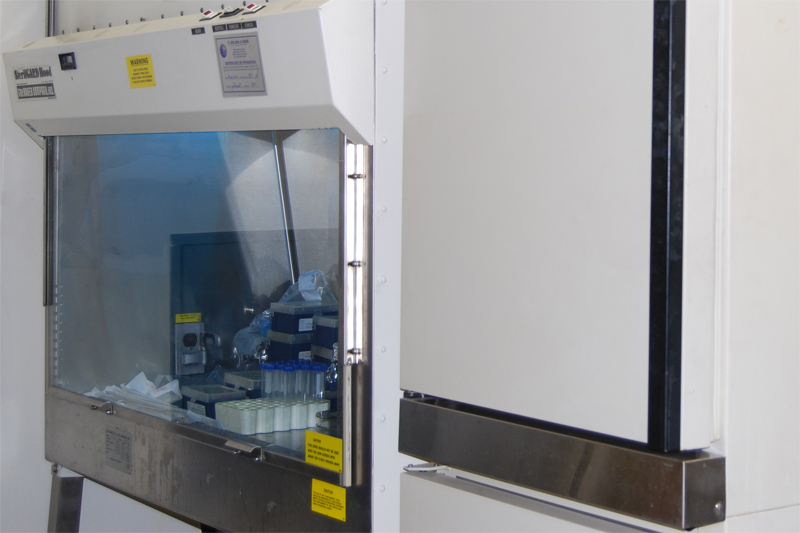 The laboratory space has full capabilities for basic science research including the collaboration with the thoracic team and the evaluation of inflammatory markers of lung cancer.